The maps of pixelwar
Five boards, five different opening problems. The lobby shows the current and the next map, for multiplayer and for single player.
Multiplayer maps take turns. Land can be claimed; water blocks land attacks and requires a reachable boat route to cross (on Milky Way the water is space and there are no boats). Mountains are impassable. The grid dimensions below describe the game board, and land percentages are rounded. A higher land percentage does not automatically mean an easier or shorter match.
| Map | Grid | Land | Character |
|---|---|---|---|
| Thronelands | 1300 × 875 | 36% | Twin continents, naval |
| World | 1968 × 1012 | 25% | Islands and chokepoints |
| Mars with Water | 1968 × 1012 | 44% | One vast landmass |
| Europe | 1470 × 1012 | 66% | Mostly connected land |
| Milky Way | 1968 × 1012 | 25% | One spiral, no boats |
Thronelands
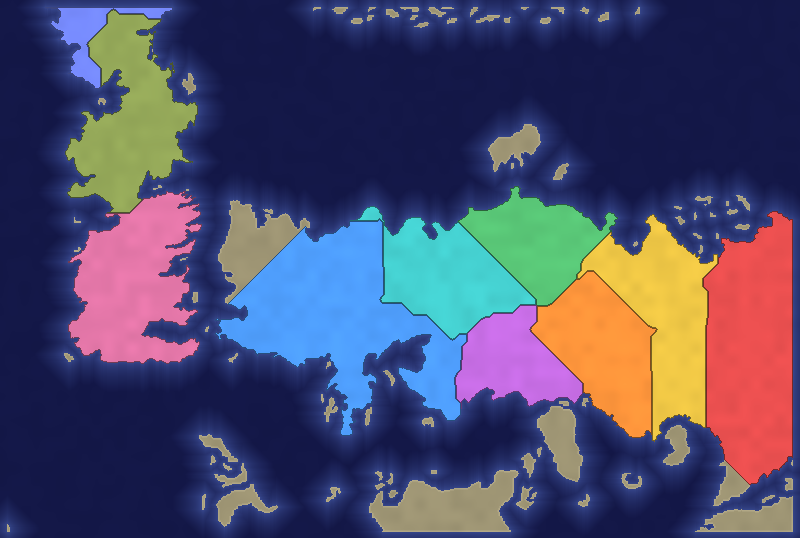
A fantasy map with two main continents and long coastlines. Start with enough connected land to grow, then plan how to reach the other continent. Narrow crossings make boats important, and a safe-looking coast can become an enemy landing point.
World
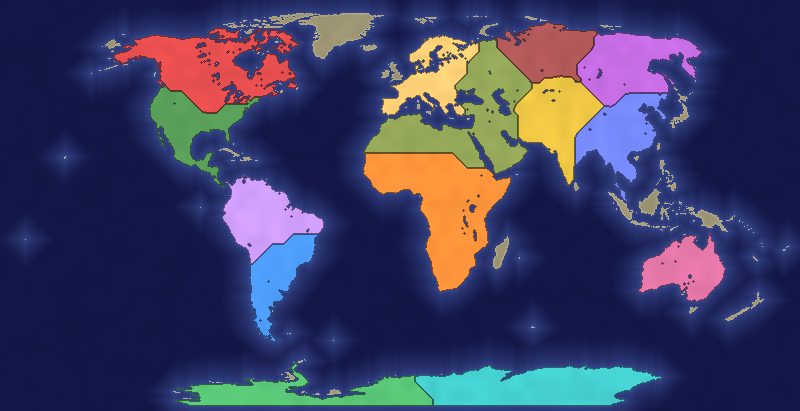
Earth's continents, islands and lakes create many separate fronts. The map is built from public-domain Natural Earth geography. A mainland start offers room to expand; an island can limit early land attacks but restrict growth until you can sail. Check both the local land connection and a possible next landing.
Mars with Water
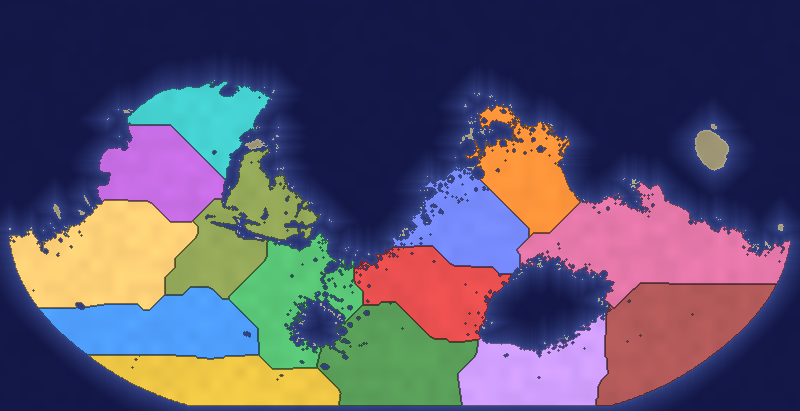
A flooded-Mars scenario built from MOLA elevation data, with water set at minus 500 metres. Most claimable land belongs to one connected landmass, but the northern ocean and inland seas still shape movement. Expect long land borders and several neighbours; water does not remove the need to defend the connections around it.
Europe
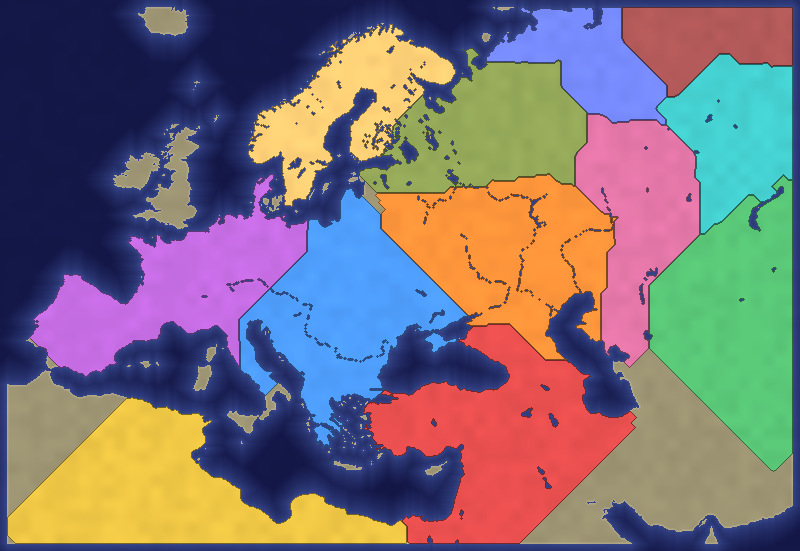
A mostly connected land map with seas, islands and rivers. The rivers are actual water cells, so a land attack cannot cross them directly; routes around their ends may still connect the surrounding territory. Early fights depend on where players start and how crowded the match is. Boats remain useful for islands and coastal landings.
Milky Way
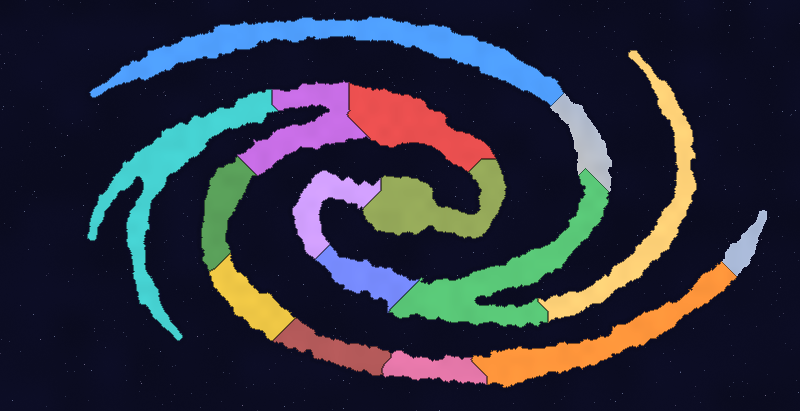
An original map shaped like our own galaxy: a central bar, two broad arms that leave its ends, two narrower arms that branch off them, and the short Orion Spur. The arms are the only land and the water is space: no boat can cross it, so every fight happens along the spiral, and the arms meet only at the centre and where they fork. The arms are roughly 50 to 100 cells wide, so in a small room a territory meets its neighbours along the arm, while in a crowded one several players share an arm side by side. A player walled in by allies can still help by donating troops to them.
Which map should I learn first?
For land expansion and defence, look for a mainland position on Europe or Mars. For sea routes, World and Thronelands reward coastal play. Milky Way has no boats at all, so it teaches holding a front along one arm. The same map can play very differently with a crowded spawn.
Why does my match look different from the picture?
The pictures show example territories during matches, not fixed player positions. Starting locations, opponent count, mode and decisions change the borders each time. Terrain stays fixed for the chosen map.
Continue with the controls or strategy guide.